

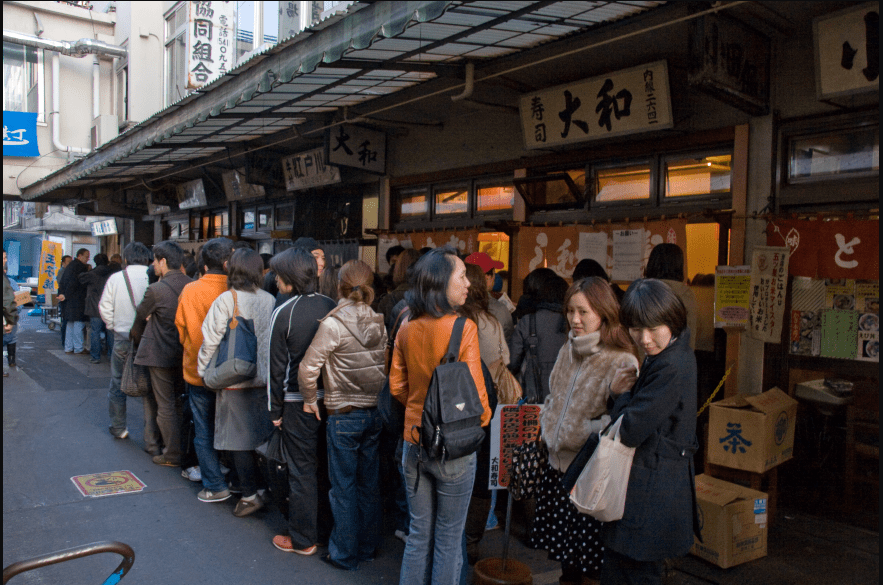
Scarcity, the fundamental challenge faced by individuals, businesses, and governments, is at the core of economic decision-making. It permeates our daily lives, shaping how we choose to allocate our limited resources to satisfy our boundless desires. From the microcosm of individual preferences to the macrocosm of global economies, the concept of scarcity underpins the study of economics.
Imagine a bustling restaurant with a seemingly endless stream of hungry patrons. The scenario vividly illustrates the essence of scarcity. In this instance, there are 80 eager diners vying for a place at tables that can only accommodate a maximum of 40. The dilemma arises: who gets a table? This question encapsulates the heart of economic analysis.
Scarcity, as a foundational concept in economics, highlights the inherent limitations of resources when confronted with insatiable human wants and needs. It is an omnipresent force, influencing every facet of our existence. Whether it’s choosing between work and leisure, saving or spending, or allocating public funds for healthcare or education, scarcity shapes our decisions.
In an idealized world with boundless resources, scarcity would be an alien concept. However, reality paints a different picture. Resources, encompassing time, money, land, labor, and raw materials, are finite. This finite nature necessitates making choices and trade-offs. Individuals and societies must grapple with the challenge of distributing these limited resources in a manner that addresses their diverse needs and preferences.
The allocation of tables in our restaurant scenario vividly mirrors this economic dilemma. It prompts us to establish criteria for distribution. In economics, two primary considerations come to the fore: allocative efficiency and equity. Allocative efficiency seeks to maximize the satisfaction of wants, ensuring that resources are allocated in a manner that generates the greatest overall benefit. Equity, on the other hand, aims for fairness in the distribution process.
Answering the question of allocative efficiency is relatively straightforward; it’s a matter of assessing which allocation strategy satisfies the most wants. However, equity is a more complex and subjective matter. What one person considers fair may differ significantly from another’s perspective.
One approach the restaurant workers might adopt is to allocate tables randomly. This method is generally viewed as equitable, as it doesn’t show preference to any individual, and it’s based on an objective criterion. Yet, it may not be allocatively efficient, as it might not cater to those who desire a table the most.
Conversely, the workers could opt to assign tables to those willing to pay the most, with money serving as a measure of want. While this approach may be perceived as efficient in terms of allocative efficiency, as it caters to those who value the tables the most, it might not be considered equitable to those who lack the financial means to compete for the tables. However, at the end of the day, it is up to the restaurant owner to decide whether his system is equitable.
The restaurant scenario elegantly encapsulates the economic conundrum we face daily. It reminds us that scarcity is not merely an abstract concept but a tangible force that shapes our decisions, both big and small. Understanding how to navigate this perpetual challenge is at the heart of economic theory and informs the choices we make in our complex, resource-constrained world.
 Centsible Thoughts
Leave a comment